
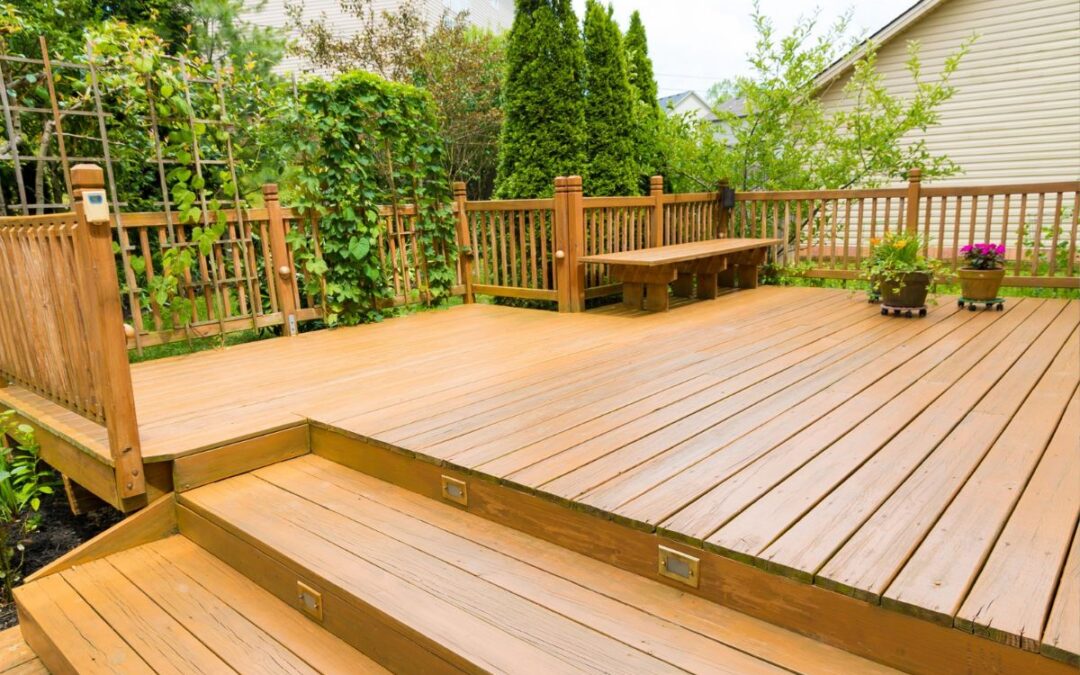
The wood outside your home takes the hardest beating all winter. Late fall is your last chance to protect it and give it a boost to survive the harsh winter weather.
Most winter preparation happens indoors. The heat gets checked, the windows get sealed, the blankets come out. But things outside the house tend to be forgotten, and those are the things that face the winter weather head-on.
Decks, fences, and stained trim spend every winter soaking up rain and snow, then freezing, then thawing, then freezing again. Late fall is your last opportunity to protect them before that harsh cycle starts.
Water starts the Damage; Cold Finishes It
Unsealed wood absorbs fall rain like a sponge. When temperatures drop, the water trapped inside freezes and expands, opening cracks and splitting boards apart from the inside out.
A deck that looked sound in September can come out of winter with split boards, popped fasteners, and rails that no longer sit tightly. Fence posts fail from the ground up, where water collects around the base, and rot sets in unknowingly.
The damage rarely announces itself as it’s happening. Instead, it shows up in spring, when the repair is bigger than it could’ve otherwise been.
A Short Walk Before the Cold Sets In
Before the ground freezes, take ten minutes and walk the deck and fence line. Look for what the winter weather will help itself to:
- Soft spots in deck boards, especially near the house and around posts
- Split or cupped boards, loose pickets, and rails that give when you lean on them
- Finish that has worn thin. (If water no longer beads on the surface, the seal is gone)
- Hardware that has worked loose: gate hinges, rail brackets, and stair fasteners
- Posts that lean or feel soft at ground level
This short walk tells you whether the wood needs a coat of protection or a repair before the cold arrives.
Seal and Stain before it’s cold
Sealant and stain need dry wood and mild temperatures to cure properly. In Champaign-Urbana, late fall is the last window for that kind of preparation. A fresh coat of stain or sealant keeps water out through the winter, and it is more cost-effective than replacing boards in the spring.
Shawluxe handles exterior staining and sealing, including the preparation that makes the finish last: cleaning, sanding where needed, and choosing a product matched to the wood and the level of exposure.
Small Repairs Now Prevent Bigger Replacements Later
Replacing one soft board in November is a small job. Waiting until spring often means replacing a whole section, because rot spreads from one board to the surrounding boards closest to it.
The same is true of a loose rail or a leaning post. A quick repair now holds the structure soundly through the winter. A repair put off becomes a rebuild, and a rebuild costs more than the maintenance ever would have.
What a Professional Walkthrough Catches
Some of the damage that matters most is easy to miss. Rot where deck boards meet the house, posts that are soft below the soil line, stain failure on the south-facing boards that take the most sun, flashing that has pulled away from the wall.
A professional walkthrough catches those problems while they are still small, and it gives you an honest sense of what needs attention now and what can wait until spring. Shawluxe has spent years caring for the exteriors of homes across Champaign-Urbana, from staining and sealing to deck and fence construction and repair, alongside exterior painting and renovations.
The team brings the same care to outdoor wood that it brings to every project: honest assessment, careful preparation, and work built to last through Central Illinois winters.
______________________________
If your deck or fence is due for attention, contact Shawluxe to schedule a consultation or request a free estimate.